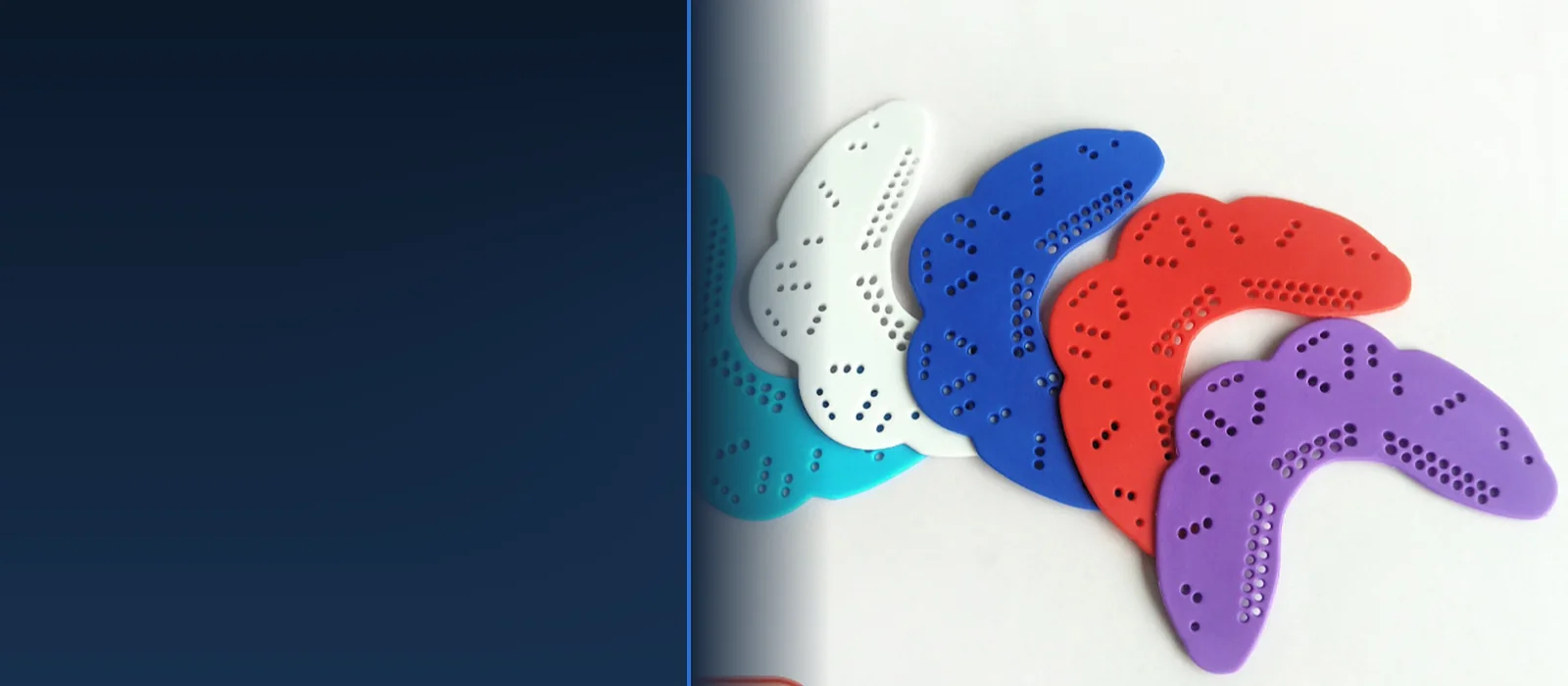
Case Studies
Four programmes, four different failures: a rear edge that split, a tether that came unglued, a compliance file that could not be produced, and a shell that went soft in a hot car. The specifications below are the ones we ran, and the leave-behind is what the buyer measured afterwards.
Customer names are withheld under NDA; references can be arranged on request.
Draft build: these profiles are written from our own production
specifications while the customer references are being confirmed. Check each figure
against a real order and set caseStudiesDraft = false in
src/data/case-studies.ts before quoting them.
UK boxing brand, 120,000 guards a year
United Kingdom · 120,000 guards a year, released in 10,000-piece drops
The problem
The brand was buying a 4.0 mm shell from a trading company and losing roughly 4% of each drop to a rear edge that had been cut too thin. Customers returned guards that split at the molar after two fittings.
Every batch also arrived in a slightly different red, because the shell and the case came from two suppliers.
What we changed
We moved the shell onto our own 4.0 mm tool and set a 0.2 mm wall tolerance, checked at the front, mid-arch and rear of every batch rather than on a sample of ten.
The rear edge is buffed by hand instead of trimmed to a line, which removed the thin spot that was failing. The case is moulded in the same plant, so the red is a single masterbatch colour for both parts.
Result
- Rear-edge failures dropped from about 4% to under 0.3% across the next four drops, measured on the brand’s own return data.
- Colour variation between shell and case disappeared because both parts now draw from one masterbatch.
Name withheld under NDA; reference available on request.
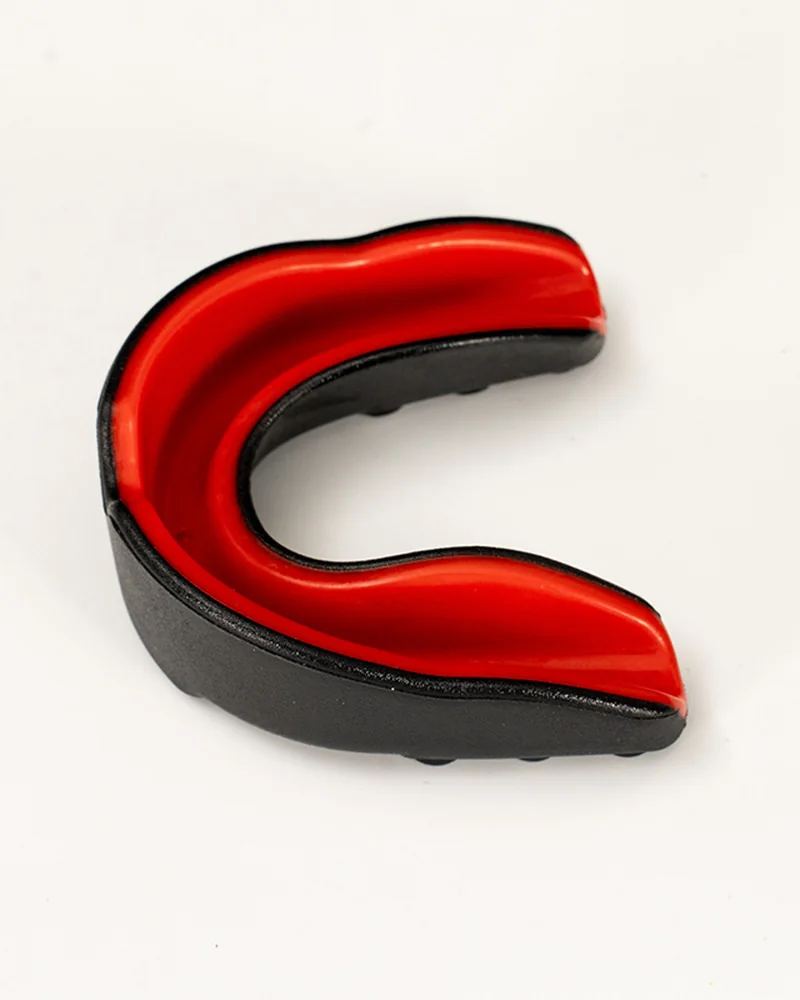
Specification as produced
- Shell
- 4.0 mm EVA, single layer, ±0.2 mm
- Colour
- Two-colour build, masterbatch matched to Pantone 186 C
- Two-colour pad print, plate on file for reorders
- Case
- 82 × 72 × 32 mm vented PP, colour-matched
- Packing
- 300 pcs per carton, individually bagged
Lead time: 5–7 day sample, then 14 days for each 10,000-piece release, four releases a year
US youth football programme, 60,000 guards a season
United States · 60,000 tethered guards per season, 3,000 per club
The problem
The league bought tethered guards from three suppliers and the tether was the first thing to break: glued straps separated from the shell within a few weeks of pre-season.
Guards were also arriving unsorted, so each club had to open cartons and bag them by size before a kit day.
What we changed
The tether is now riveted to the shell rather than glued, and every batch is pulled to 50 N for 500 cycles before packing.
We pack by club: each carton carries one club’s order, bagged by size, with a printed list of player numbers and a name label on each bag.
Result
- Tether separations stopped being reported after the second season with the riveted strap.
- Kit day moved from two days of sorting to handing out pre-labelled boxes, which the league put at about 30 staff hours saved per season.
League name withheld under NDA; the packing list template is available on request.
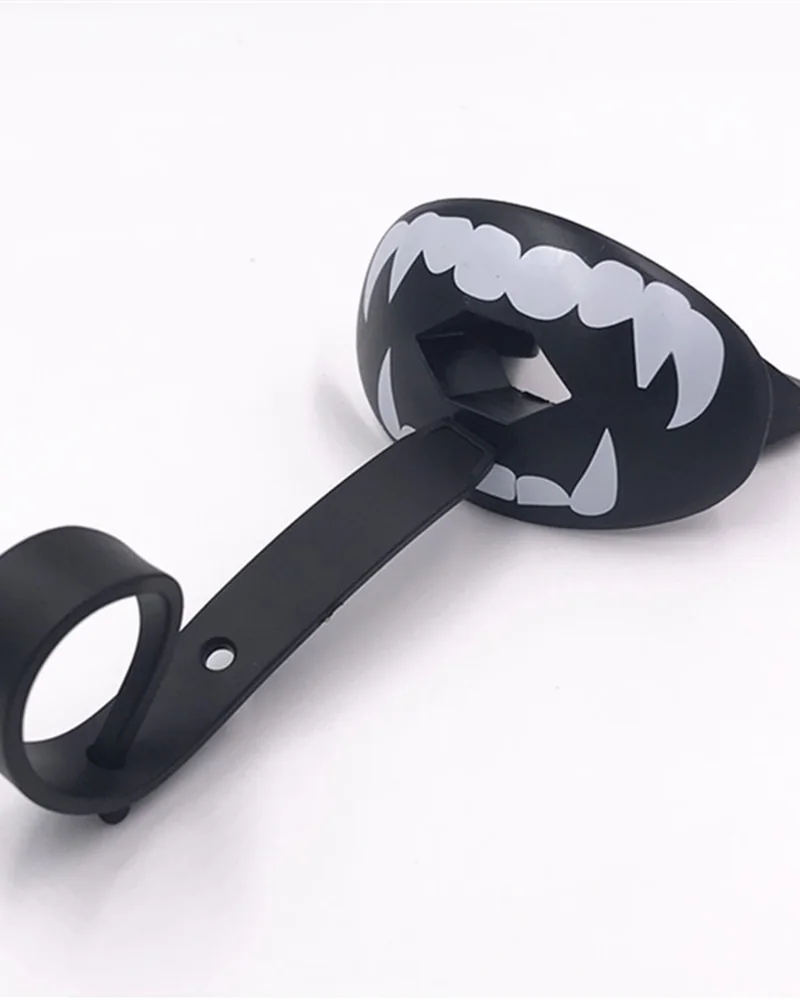
Specification as produced
- Shell
- 3.5 mm EVA, youth 8–14 arch tool
- Tether
- TPU strap, riveted, 500 pull cycles at 50 N
- Jersey number pad printed per guard, no minimum per number
- Case
- Polybag with printed name label, team-set boxes of 50
- Carton
- 300 pcs per carton, sorted by club
Lead time: 7 day sample round on the club artwork, then 18 days for the full season order
German sports retailer, own-brand range
Germany · 45,000 sets a year, 3,000 per release
The problem
The retailer’s compliance team could not get a dated REACH declaration or a phthalate report for the case, only a generic statement from the previous supplier, so the range was blocked from listing.
The retail pack also failed a drop test: the case hinge cracked when the box was dropped from 1.2 m.
What we changed
We issued a per-shipment REACH SVHC declaration against the current candidate list and a 6P phthalate report that covers the EVA, the TPE and the PP case, with the detection limit printed on the report.
The hinge was moved to a 1.2 mm wall with a living-hinge geometry rated to 5,000 cycles, and the tuck box gained a 3 mm corrugated insert so the case no longer takes the drop directly.
Result
- The range listed in the following season with the documentation pack supplied at order confirmation.
- Drop testing at 1.2 m passed on the revised pack, with no hinge failures across the sample set.
Retailer name withheld; the documentation pack structure can be shared.
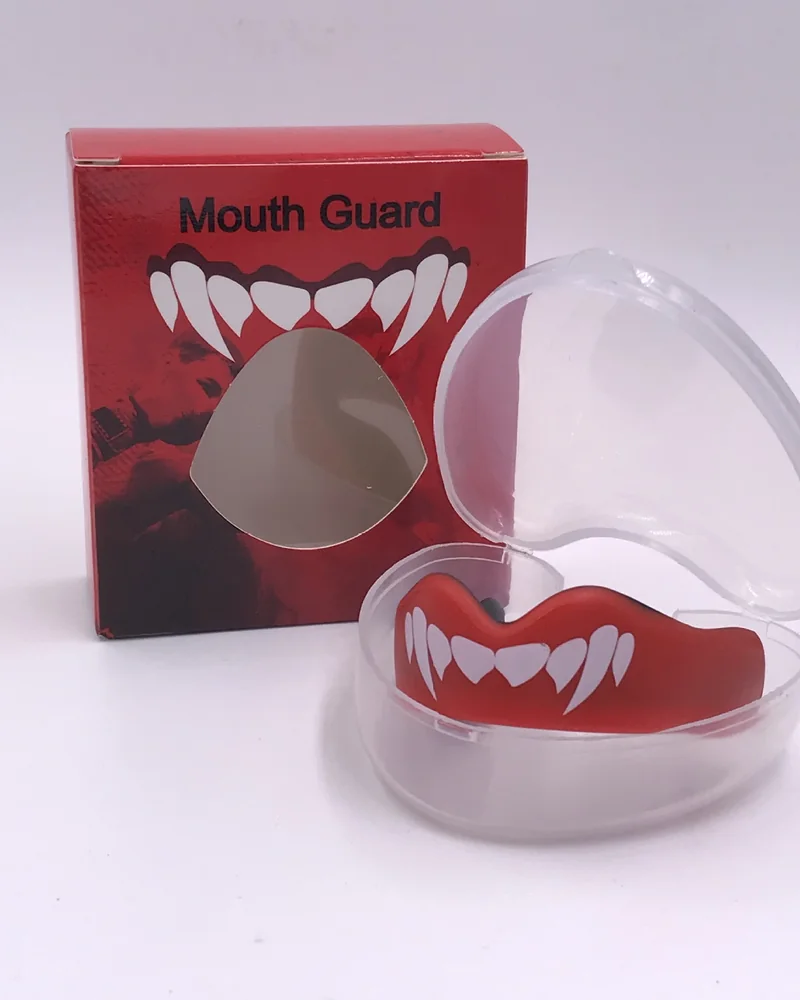
Specification as produced
- Shell
- 3.5 mm EVA with vented PP case
- Compliance
- REACH SVHC per shipment, 6P phthalate report incl. the case
- Hinge
- 1.2 mm living hinge, 5,000 cycles
- Pack
- Printed tuck box with 3 mm corrugated insert
- Barcode
- EAN-13 and age warning printed to the retailer’s artwork
Lead time: 6 day sample with the insert, then 16 days per release
Australian MMA gym chain, 24 locations
Australia · 24,000 guards a year in four colourways, 2,000 per drop
The problem
Members were being given a 3.0 mm guard that went soft in a hot car and had to be replaced every few months, which the chain was absorbing as a cost.
The chain also wanted four colourways but was told the minimum was one colour per order.
What we changed
We moved them to a 5.0 mm dual-density shell with a softer inner layer, which holds its shape at cabin temperatures far better than the 3.0 mm single layer.
Mixed colourways run inside one order at 50 pieces per colour, so 2,000 pieces covers four colours without a stock commitment.
Result
- Members now keep a guard for a season rather than a few months, which cut the chain’s replacement spend.
- Four colourways in one order removed the need to hold stock between drops.
Chain name withheld; member feedback summary available on request.
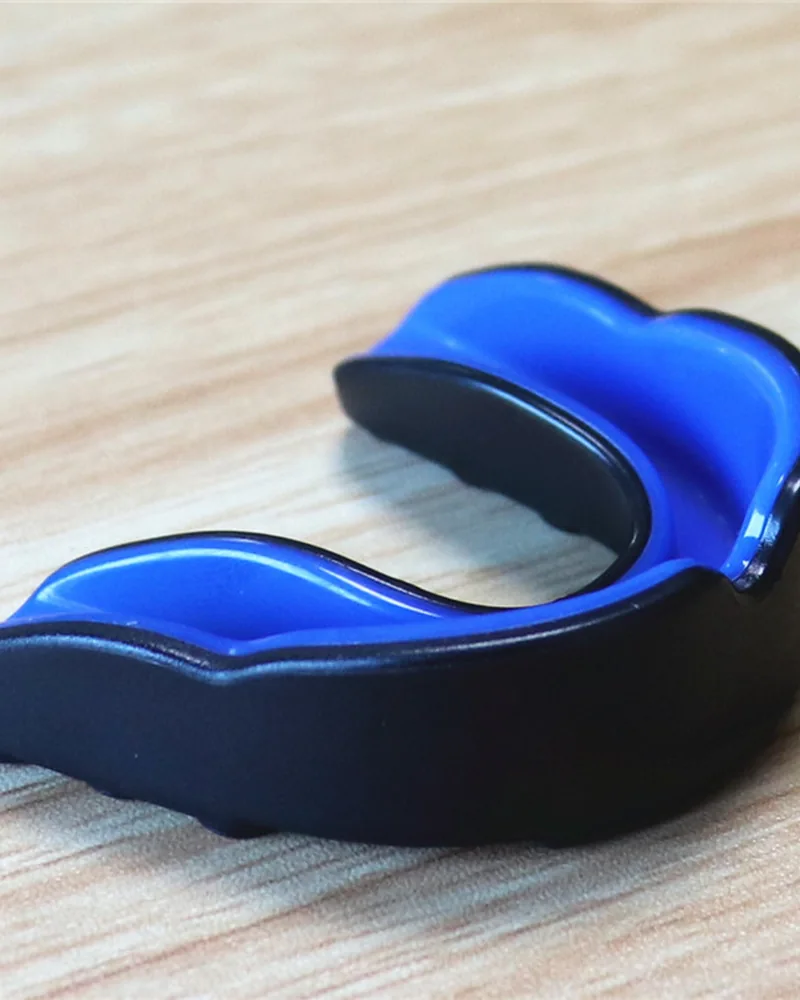
Specification as produced
- Shell
- 5.0 mm dual density, hard outer, soft inner
- Colours
- Four colourways, 50 pcs per colourway
- One-colour pad print, gym logo
- Case
- Vented PP case, colour matched per colourway
- Carton
- 200 sets per carton, assorted colourways
Lead time: 5 day sample, then 12 days per 2,000-piece drop, quarterly
Have a similar problem to the ones above?
Send the shell you are running now and the failure you keep seeing. We will tell you which of these fixes applies.